#1 Rolling Stone (January 22, 1981) #1 Rolling Stone (January 22, 1981)
Rolling Stone’s cover of John Lennon and Yoko Ono was named the top magazine cover to appear since 1965. The image was photographed by renowned celebrity portraitist Annie Leibovitz mere hours before Lennon was shot on December 8, 1980. The photo was eventually used on the cover of Rolling Stone’s tribute issue to Lennon on January 22, 1981. |
 #2 Vanity Fair (August 1991) #2 Vanity Fair (August 1991)
Vanity Fair’s provocative cover shot of the naked and hugely pregnant Demi Moore (also shot by Annie Leibovitz) projected the actress to even greater heights after the huge success of the movie Ghost the previous year. The cover helped firmly establish Moore as a member of Hollywood’s A-List at the time. |
 #3 Esquire (April 1968) #3 Esquire (April 1968)
The controversial April 1968 cover depicting Muhammad Ali impaled by six arrows appeared on the heels of his refusal to be inducted into the U.S. Army because of his religious beliefs. (Ali, convicted violating the Selective Service Act, was barred from the ring and stripped of his title.) The cover, the second of three Esquire covers defending Ali, shows the boxer martyred as St. Sebastian, a patron saint of athletes and one who was shot with arrows for his steadfast religious beliefs. This was one of the covers designed by George Lois, Esquire’s Art Director during the 1960s. |
 #4 The New Yorker (March 29, 1976) #4 The New Yorker (March 29, 1976)
Saul Steinberg’s March 29, 1976 The New Yorker cover, “View of the World from 9th Avenue,” has come to represent Manhattan’s telescoped perception of the country beyond the Hudson River. The cartoon showed the supposed limited mental geography of Manhattanites. |
 #5 Esquire (May 1969) #5 Esquire (May 1969)
One of the most iconic of Art Director George Lois’s creations, the May 1969 cover of Esquire juxtaposed the celebration of pop culture while deconstructing celebrity. The image of a drowning Andy Warhol was a friendly spoof of the artist’s famous Campbell Soup artwork, a pervading symbol of the Pop Art movement. |
 #6 The New Yorker (September 24, 2001) #6 The New Yorker (September 24, 2001)
New Yorker Covers Editor Fran?oise Mouly repositioned Art Spiegelman’s silhouettes, inspired by Ad Reinhardt’s black-on-black paintings, so that the north tower’s antenna breaks the “W” of the magazine’s logo. Spiegelman wanted to see the emptiness, and find the awful/awe-filled image of all that disappeared the on 9/11. The silhouetted Twin Towers were printed in a fifth, black ink, on a field of black made up of the standard four color printing inks. An overprinted clear varnish helps create the ghost images that linger, insisting on their presence through the blackness. |
 #7 National Lampoon (January 1973) #7 National Lampoon (January 1973)
National Lampoon quickly grew in both popularity in 1970s, when it regularly skewered pop culture, counterculture and politics with recklessness and gleeful bad taste. The notorious January 1973 shot of a human hand holding a revolver to the head of a docile-looking dog, who suspiciously eyes the firearm with a sideways glance, was photographed by Ronald G. Harris and is the magazine’s most memorable cover. |
 #8 Esquire (October 1966) #8 Esquire (October 1966)
This cover story by legendary writer John Sack helped change public perception of the Vietnam War and was a landmark in the history of New Journalism. Early in 1966, when America had little more than 100,000 troops in Vietnam, Sacks became Esquire‘s war correspondent in Vietnam. At 33,000 words, the resulting article was and still is the longest ever published in Esquire. The all-black cover with the white inscription, “Oh My God—We hit a little girl,” became the cover to reflect the story. |
 #9 Harper’s Bazaar (September 1992) #9 Harper’s Bazaar (September 1992)
Harper’s Bazaar, which debuted in 1867 as America’s first fashion magazine, celebrated its 125th anniversary in 1992, and the September 1992 issue under legendary Editor-in-Chief Liz Tilberis’s direction heralded one of the most dramatic magazine reinventions in history. Tilberis helped transform the magazine from an “also-ran” fashion magazine into the one of the most cutting-edge and experimental of the big fashion glossies—illustrated by the creative typeface and avant-garde image of Linda Evangelista on the September cover. |
 #10 National Geographic (June 1985) #10 National Geographic (June 1985)
Photographer Steve McCurry immortalized the haunted eyes of a 12-year-old refugee in a camp on the Afghanistan-Pakistan border. Soviet helicopters destroyed her village and family, forcing her to make a two-week trek out of the perilous mountains of Afghanistan. The photo became a National Geographic icon after it was published on the cover in June 1985. Since then, this raw, untouched image has been used on rugs and tattoos, making it one of the most widely reproduced photos in the world. |
 #11 LIFE (April 30, 1965) #11 LIFE (April 30, 1965)
The fetus became widely recognized after LIFE published Linnart Nilsson’s photograph of an 18-week-old fetus inside the womb on its April 30, 1965 cover. Swedish photographer Nilsson used an endoscope with an electronic flash to capture both the cover picture and pictures appearing inside the magazine to chronicle the beginning of human life. These pictures are part of Nilsson’s book, A Child is Born, which sold eight million copies in the first four days after publication. |
 #12 TIME (April 8, 1966) #12 TIME (April 8, 1966)
The question “Is God Dead?” appeared on the cover of TIME in red letters against a black backdrop, and this was the first time the magazine used a type only cover. The article, written by the editors and entitled “Toward a Hidden God,” included the opinions of Christian theologians Gabriel Vahanian, Paul van Buren, William Hamilton, Thomas J. Altizer, and the Rabbi Richard Rubenstein. They believed the “death of God” had come since God was no longer visible in public life and religion was dead. This article received much backlash from readers, but the radical movement died out by the end of the decade. This is one of two “type only” covers in the Top 40. |
 #13 LIFE Special Edition (1969) #13 LIFE Special Edition (1969)
This LIFE special edition “To the Moon and Back” chronicles the first moon landing, brought about by the courage of the Apollo 11 astronauts and the thousands of people who supported their mission. On the cover is a picture of Buzz Aldrin, taken by fellow astronaut Neil Armstrong. Along with color photographs of this historic walk on the moon, there are biographical sketches of Neil Armstrong, Edwin Aldrin and Michael Collins. There is also a history of manned space exploration from the first single orbit around the earth orbit to the launch of Apollo 11. |
 #14 The New Yorker (December 10, 2001) #14 The New Yorker (December 10, 2001)
This New Yorker cover by Maira Kalman and Rich Meyerowitz features a map of “New Yorkistan” where the city is divided into Middle Eastern names. The pastel map pastel map showed a flat, bird’s-eye view of New York City drawn in pen and wash. It echoed Saul Steinberg’s map “View of the World from 9th Avenue,” published on the cover of The New Yorker on March 29, 1976 (ranking no. 4 on this Top 40 list). |
 #15 Harper’s Bazaar (April 1965) #15 Harper’s Bazaar (April 1965)
This cover of Harper’s Bazaar is a photograph of model Jean Shrimpton by photographer Richard Avedon. The cover of Shrimpton peering from behind a bright pink Day-Glo space helmet was designed by Art Directors Ruth Ansel and Bea Feitler. This photograph, with the Harper’s Bazaar logo vibrating against it in acid green has been often reproduced as an emblem of the sixties. |
 #16 The Economist (September 10-16, 1994) #16 The Economist (September 10-16, 1994)
This controversial cover of The Economist portrays “The Trouble with Mergers” by showing an illustration of two camels mating. The London-based magazine published the cover in the North American edition, but not in the European edition. Reaction to this cover was mixed, with some readers disgusted and others highly amused. |
 # 17 TIME (June 21, 1968) # 17 TIME (June 21, 1968)
Roy Lichtenstein’s drawing of “The Gun in America” was the cover of the June 21, 1968 issue of TIME. Soon after the assassinations of Martin Luther King Jr. and Robert Kennedy, pop artist Lichtenstein aimed a smoking gun at readers to emphasize the urgency for gun legislation. Before the end of the year, Congress passed the Gun Control Act of 1968 that banned most interstate sales, licensed most gun dealers and barred felons, minors and the mentally ill from owning guns. |
 #18 ESPN the Magazine (June 29, 1998) #18 ESPN the Magazine (June 29, 1998)
This ESPN the Magazine cover portrays Michael Jordan jumping against an all-white background in his Chicago Bulls uniform. Two weeks after winning his sixth title with the Bulls, the corresponding article speculates whether or not Jordan will retire from basketball. Jordan retired on January 13, 1999, but two years later signed a deal to play for the Washington Wizards. On April 16, 2003, Jordan played his last game and announced his final retirement. |
 #19 Esquire (December 2000) #19 Esquire (December 2000)
Bill Clinton’s appearance on Esquire’s cover at the tail end of his administration provoked ire from both sides of the political spectrum. Accompanying an extensive profile of the President in his waning weeks in office, Platon’s cover shot (the result of an 8-minute session in a cramped hotel bedroom in Princeton, NJ) was intended to evoke the Lincoln Memorial. Instead it came to be seen as fraught with sexual significance following the scandal with White House intern Monica Lewinsky. |
 #20 Blue (October 1997) #20 Blue (October 1997)
A man diving appears on the premiere October 1997 issue of Blue. Art Director David Carson, known for his innovative typography and photography designed the cover. Editor Amy Schrier launched the first adventure lifestyle magazine, covering outdoor recreation, action sport and adventure travel for men and women. The magazine also explored the diverse cultures of the world and took a look at their political, economic and social concerns. |
 #21 LIFE (November 26, 1965) #21 LIFE (November 26, 1965)
“The Blunt Reality of War in Vietnam” appears on the November 26, 1965 cover of LIFE. Paul Schutzer’s photograph of a Vietcong prisoner with his eyes and mouth taped shut captured the tumultuous war. Schutzer was one of LIFE’s best photographers, but was killed on assignment while covering the Six-Day War in 1967. |
 #22 George (Oct/Nov 1995) #22 George (Oct/Nov 1995)
The premiere issue of George featured supermodel Cindy Crawford on the cover dressed as George Washington. George was founded by John F. Kennedy Jr. and covered politics, current events, pop culture and celebrity news. In 1999, Kennedy was killed in a plane crash and consequently, George folded in March 2001. |
 #23 The Nation (November 13, 2000) #23 The Nation (November 13, 2000)
This cover of The Nation features artwork by Brian Stauffer that depicts George Bush as Alfred E. Newman. The Nation compared Bush to Alfred E. Newman, the fictional mascot of the magazine Mad, complete with a button that reads, “What, me worry?” The U.S. presidential election was held on November 7, 2000, and when this issue of the magazine was released, the winner of the election was still unclear. The issue discusses what would happen to the country and the world if Bush became president, and in fact Bush was declared the winner of the election the next month. |
 #24 Interview (December 1972) #24 Interview (December 1972)
This cover of Interview was designed by Richard Bernstein and features Andy Warhol photographing model Grace Jones for the December 1972 issue. Warhol founded the magazine in 1969 and featured unedited interviews with celebrities along with photographs and striking ads. |
 #25 TIME (September 14, 2001) #25 TIME (September 14, 2001)
The cover of the September 14, 2001 special edition of TIME features a photograph of the Twin Towers terrorist bombings on September 11, 2001, taken by photographer Lyle Owerkoof. The issue included testimonies from survivors, more photographs of the Twin Towers after the bombings, and a salute to all those who perished in the tragedy. |
 #26 People (March 4, 1974) #26 People (March 4, 1974)
This premiere issue of People featured Mia Farrow on the cover biting a strand of pearls. Farrow was starring in the movie “The Great Gatsby” as Daisy Buchanan and the cover dubbed Gatsby the year’s next big movie. Since this issue, People has become a popular magazine of celebrity and pop culture news and is best known for yearly special issues naming “The 50 Most Beautiful People,” “The Best and Worst Dressed” and “The Sexiest Man Alive.” |
 #27 Entertainment Weekly (May 2, 2003) #27 Entertainment Weekly (May 2, 2003)
The Dixie Chicks appear naked on this cover of Entertainment Weekly with slogans such as “Boycott,” “Traitors,” “Hero” and “Proud Americans” printed on their bodies. Two months before, member Natalie Maines criticized the impending invasion of Iraq by President George Bush at a concert in London. This remark sparked intense criticism from many Americans who subsequently boycotted The Dixie Chicks music and concerts. In their interview with Entertainment Weekly, the group discussed their reaction to the criticism and what lies ahead for them in the country music industry. |
 #28 LIFE (April 16, 1965) #28 LIFE (April 16, 1965)
This black and white photograph on the cover of LIFE by Larry Burrows shows the Vietcong zeroing in on vulnerable United States helicopters. The LIFE photographer had covered the war in Vietnam since 1962 and reported this article from Da Nang. On this day, Burrows accompanied a helicopter squadron on a mission where the pilot was killed and other members of the squadron were wounded. Burrows himself was killed in 1971 while on assignment in Laos when his helicopter was shot down by enemy fire. |
 #29 (tie) Playboy (October 1971) #29 (tie) Playboy (October 1971)
Photographer Richard Fegley took this photo of model Darine Stern sitting on a Playboy bunny chair for the October 1971 cover of the magazine. The idea came about when art designer Len Willis decided to create a chair using the famous rabbit head. Stern became the first African-American model to grace the cover of Playboy and the cover has become a classic for the magazine. |
 #29 (tie) Fortune (October 1, 2001) #29 (tie) Fortune (October 1, 2001)
This special edition of Fortune, entitled “Up from the Ashes,” shows a man covered in ashes after the September 11, 2001 terrorist attacks. Published less than a month after the attacks, the issue discussed the economic ramifications of the September 11, 2001 terrorist attacks on New York City and the world. |
 #31 Newsweek (November 20, 2000) #31 Newsweek (November 20, 2000)
This cover of the November 20, 2000 issue of Newsweek is entitled “The Winner Is…” with a photo of half George W. Bush and half Al Gore. The presidential election had taken place earlier that month, but there was still no clear winner declared because of the close ballot count in the state of Florida. In this issue, Newsweek chronicled the lawsuits, court challenges and endless counting of ballots. The following month, George W. Bush was declared the winner of the closest presidential election in United States history. |
 #32 Vogue (May 2004) #32 Vogue (May 2004)
Photographer Irving Penn captures Nicole Kidman’s back profile dressed in a Christian Lacroix oyster satin backless dress for this cover of the May 2004 issue of Vogue. This was the first cover shoot for Vogue by Penn since 1989. The issue contains more photographs of Kidman dressed as a Grecian goddess, an Italian diva and as legendary actress Sarah Bernhardt. |
 #33 Newsweek (July 30, 1973) #33 Newsweek (July 30, 1973)
This July 30, 1973 cover of Newsweek, entitled the “The Nixon Tapes,” gives an aerial view of the White House turned into a tape recorder. The article discusses how President Nixon had been secretly taping everything said in his offices and on his telephones for at least two years. The following year, the tapes were released and they proved Nixon was involved with the Watergate Scandal cover-up. In August 1974, Nixon announced his resignation and Gerald Ford became President. Ford later pardoned Nixon, immunizing him from prosecution for any crimes he may have committed as President. |
 #33 (tie) Wired (June 1997) #33 (tie) Wired (June 1997)
This June 1997 cover of Wired is entitled “Pray,” with a picture of the Apple symbol covered in barbed wire. The article “101 Ways to Save Apple” gave an assessment of what could be done to fix the once-great company. Steven Jobs and Steven Wozniak founded Apple Computer in 1976 when they introduced the Apple I. However, by 1997, Apple saw major competition from other computer companies and experienced economic troubles. Since that time, Apple has made a comeback, due in part to the tremendous success of the iPod. |
 #35 New York (June 8, 1970) #35 New York (June 8, 1970)
This cover of New York is entitled “Free Leonard Bernstein,” with a photograph of New York society women posing with fists upraised. Bernstein was an acclaimed American composer and orchestra conductor who was a presence on Broadway, in Hollywood, at Carnegie Hall and at the New York Philharmonic. He supported the Black Panthers and in 1970, held a fund-raising meeting for the organization at his apartment. The magazine cover was a jab at his association with the Black Panthers and their radical ideology. |
 #36 People (September 15, 1997) #36 People (September 15, 1997)
This cover of People features a black and white photograph of Princess Diana, and the issue is a tribute to her life after she was killed in August 1997 in a car crash. Diana appeared on the cover of the magazine a record 52 times and was one of the most popular People cover subjects. In 1981, she married Prince Charles and arguably became one of the most famous women in the world. She was lauded for her high-profile involvement in AIDS issues and for an international campaign against landmines. Diana’s death was greeted with extraordinary public grief, and her funeral at Westminster Abbey drew an estimated three million mourners in London, as well as worldwide television coverage. |
 #37(tie) Details (February 1989) #37(tie) Details (February 1989)
This cover of Details features a photograph of Cyndi Lauper sporting a classic Hollywood look. In the issue, Lauper discusses her songwriting and recounts her trip to the U.S.S.R. with a group of American songwriters the previous year to collaborate with Soviet counterparts. They produced the song “Cold Sky,” which appears on the album Action Speaks Louder Than Words. |
 #37 (tie) Fast Company (Aug/Sept 1997) #37 (tie) Fast Company (Aug/Sept 1997)
This cover of Fast Company is entitled “The Brand Called You,” against the Tide background. In the cover article, author Tom Peters discussed how people can market themselves as brands to stand out and move up in their professional life. |
 #37 (tie) Glamour (August 1968) #37 (tie) Glamour (August 1968)
This issue of Glamour model Katiti Kirondi II on the cover features the “Best Dressed College Girls.” This marked the first time an African-American woman appeared on the cover of a national women’s monthly magazine. This issue featured the 10 best-dressed college girls and 100 great fall looks, which included mini-skirts and psychedelic colors. |
 #37 (tie) National Geographic (October 1978) #37 (tie) National Geographic (October 1978)
This cover of National Geographic magazine is entitled “Conversations with a Gorilla,” with Koko the gorilla snapping a photograph of her reflection in the mirror. The photo was of such high quality and significance that it was chosen to be the cover photo for the October 1978 National Geographic article featuring Koko. Developmental psychologist Francine Patterson spent six years with Koko teaching her sign language and this led Patterson and other researchers to believe Koko displayed evidence of linguistic capabilities. |
 #37 (tie) TIME (April 14, 1997) #37 (tie) TIME (April 14, 1997)
This cover of TIME magazine is entitled “Yep, I’m Gay,” with a photograph of Ellen DeGeneres by celebrity photographer Firooz Zahedi. In the April 14, 1997 issue of TIME magazine, DeGeneres spoke to writer Bruce Handy and admitted to him that she was gay and this made her television’s first openly gay star. The television character played by DeGeneres on the sitcom Ellen also came out later that month and this was one of the most watched episodes of the series. |






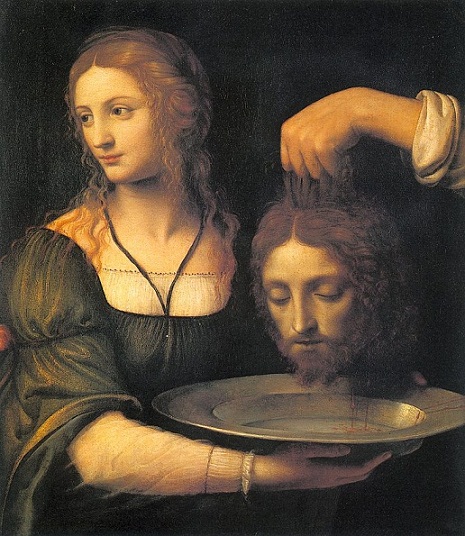 莎乐美与潘金莲,同样地美丽而又似乎邪恶。二人同样地把爱情与杀人和血腥连结在一起。二人同样以杀人始,以被杀终。两人同样爱上了不爱自己、对爱无回应的人:先知约翰与武松。两个人都有另外一个男人的性介入:一个是莎乐美的继父希律王,一个是西门庆大官人。(希律王还兼着潘金莲故事中的张大户,即原来潘的主人、在潘金莲身体上未能得手,遂将潘金莲下嫁武大郎的那个极端坏蛋的角色。)根据学者特别是女性主义学者的分析,希律王对于莎乐美存在着性侵犯与性压迫。两个故事里都有一对嫂子与小叔子的恋情:《莎乐美》中是莎乐美的母亲与小叔子希律王成了婚,潘金莲的故事中是潘金莲苦恋武松。