Posts by: 爱德布克

《经济学家》2016年最佳图书

参考:《经济学家》年度最佳图书:2011201220132014201520172018

High fliers: Books of the Year 2016

The best books of 2016 are about China, language, microbes, hereditary power, inequality and medieval manuscripts

Politics and current affairs


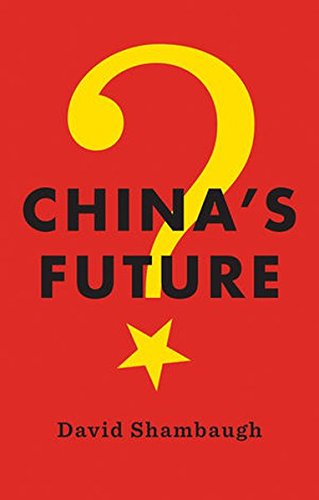
China’s Future. By David Shambaugh. Polity; 195 pages; $19.95 and £14.99
No country has modernised its economy without also becoming a democracy. A respected American political scientist asks whether China can break the mould.

刘忠:“命案必破”的制度结构分析

2004年11月公安部南京会议(全国侦破命案工作会议)上,公安部认可此前湖北、河南等地所作的尝试,正式提出“命案必破”口号。[1]此后,媒体和学者对之提出了一系列批评,认为“命案必破”要求过高,是浮夸;而且在“命案必破”这样一个不切实际的口号压力下,必然刺激办案民警进行刑讯逼供,从而侵犯犯罪嫌疑人的权利。在近期,媒体、学界密切注意一些刑事错案,刑诉法、刑法、司法制度甚至法理学领域的很多学者都投入相当多的学术精力对错案的问题进行关注,在这些学者对于错案的归因上,也大多诉诸于“命案必破”,将“命案必破”作为错案发生的一个重要诱导因素。[2]虽然公安部刑侦局局长何挺公开亮明态度,表示“命案必破不会引发逼供”,但并未作出有力的回应,而只是声称:各相关执法部门为“命案必破”设置了两道关卡即检察机关直接监督和公安机关内部的完整的案件质量审核把关机制,特别是命案实行的“一长双责制”或者说“三条防线”即检察机关监督+案件质量审核+增加办案透明度,可以避免错案发生。[3]

由本文的分析切入思路来看,就“命案必破”话题而言的批评文字,对于公安机关的分析和评价都是采用了一种整体论(holism)的方式,将公安机关内部视为一个“黑箱”,将公安机关作为一个“质点”或“单子”(monad)[4],而不是能够细致地进入公安机关内部,感知公安机关作为一个由各个分支单元部门组成的组织在如何运作。因此就无法考量执政党和上级公安机关如何对于公安组织内部进行信息识别和提供激励,进而没有力量分析公安机关内部的组织变化如何影响作为一个整体的组织的外部绩效。 而这恰恰是分析公安机关提出“命案必破”口号的来由以及“命案必破”在制度上何以可能的关键点。

本文观点认为,“命案必破”口号提出后,在其统领下又相继出台了一批据以实现该口号的具体制度、规则[5],从而对整个普通刑事案件的侦查工作和公安机关的机构、资源配置都产生了极大影响,已经成为“严打”方针之下一个极为重要的中观层面的刑事政策。本文试图重新对这一问题进行审视,从“结构-组织”维度来看待行动主体的外显行为,但是方法上大抵秉持陈寅恪所说的“同情的理解”,首先对“命案必破”进行尽可能“主位的”(emic)分析,然后提出本文的认识。

刘忠:政治性与司法技术之间:法院院长选任的复合二元结构

中国现代的学科专业分类出自西方。对于学科专业化,沃勒斯坦认为:“十九世纪思想史的首要标志就在于知识的学科化和专业化。”“多元学科的创立乃是基于这样一个信念:由于现实被合理地分成了一些不同的知识群,因此系统化研究便要求研究者掌握专门的技能,并借助于这些技能去集中应对多种多样、各自独立的现实领域。”[1]就法学而言,恩格斯认为:“随着立法进一步发展为复杂和广泛的整体,出现了新的社会分工的必要性:一个职业法学家阶层形成起来了,同时也就产生了法学。”[2]这产生了三个逻辑递进的后果:

1、职业法学家阶层产生后,对自有利益的认识从自发到自觉,推动着法学进行有意识地固化和扩张,对于通过法学学历和经历所表现出的专业化,与其他学科竞争;
2、法学的学科化、专业化确立后,法律职业主义认为专业知识的训练符号,与该专业领域的职业实践者,两者之间应具有一一对应的映射关系,否则即是反现代化;
3、英语中学科(discipline)同时具有的含义是纪律/规训,选择某一个学科,意味着接受该学科既成知识体系规范的纪律约束或规训。

《经济学家》2015年最佳图书

参考:《经济学家》年度最佳图书:2011201220132014201620172018

Shelf life

The best books this year are about North Korea, Detroit, Nagasaki and being a pilot

Politics and current affairs


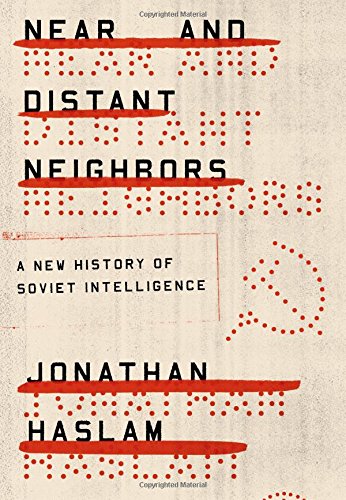
Near and Distant Neighbours: A New History of Soviet Intelligence. By Jonathan Haslam. Oxford University Press; 400 pages; £20

A detailed appraisal of how the Soviet Union handled undercover operations from the communist revolution in 1917 until the end of the cold war. The most gripping chapters focus on the chaos that was unleashed by Josef Stalin.

刘忠:四级两审的制度发生和演化

1990年代末以来司法体制改革的基本叙事前提是反司法地方保护主义,作为反司法地方保护主义对策,一是将两审制改为三审制,二是调整人民法院设置,突破按行政区划设置的模式[1]。增设跨区划法院,不仅是突破政权底部的乡、县、市,而主要是在政权上部设立跨省级区划的大区分院,作为最高人民法院的派出机构,这被认为是法院设置体制改革的最终目标。[2]在现当代中国司法史上,法院层级调整和审级变化,不是孤立事件,而是互为因果、彼此正相关的一个主题的两个侧面。跨省的最高人民法院派出机构这一方案,在2014年走入制度实践,对三审制的讨论,也形成热潮。区别于以往司法改革对微观工作机制的改变,这是对当代司法体制的突破。

当代司法体制的架构,由1982年《宪法》及稍后修改的《人民法院组织法》确立,这两法是跃过1975、1978年《宪法》和组织法,以1954年《宪法》和组织法为基础拟定[3]。决策中枢在1954年对1949-1954年一届政协期间的政治、司法体制等大量制度进行废弃、重新设计,其中即包括撤销1949-1954年之间,曾经在司法体制中存在的跨省的最高人民法院大区分院,以及废弃三审制,所以一届政协期间被称为过渡政体。然而,六十年一甲子,大区分院制度轮回。两相辉映,落下一个设问:为何大区分院在1954年宪制框架下会被撤销,这对中国司法体制的塑造产生什么影响?

由此,1949-1954年期间的制度规范和实践,即成为考察当代司法体制的制度史前史。本文即对这一历史过程的制度史细节进行分析,体察中国司法的构造与司法政治关切所在。制度演化,由无数历史细节连缀、冲决而发生,本文繁密的历史事件和细节所传递的制度史线索是:

Chen Weigang: Confucian Humanism and Theodicy

Confucian Humanism and Theodicy

Weigang Chen, Philosophy and Religious Studies Program, Faculty of Social Sciences and Humanities, The University of Macau, Av. Padre Tomás Pereira Taipa, Macau. E-mail: wgchen@umac.mo.

Abstract

This article explores the puzzle of Confucian “divine humanism” in light of the Weberian scheme of religious rationalization. Relating the Confucian humanistic orientation to current discussions of the phenomenon of “amoral familism,” I argue that the Confucian puzzle calls into question the cornerstone of Max Weber’s comparative religion, namely his influential contrast between religious legitimation and theodicy. In particular, the puzzle suggests that in pre-Confucian China, there was no legitimate cosmic-social world order to which Confucianism managed to adjust, let alone to affirm. As a matter of fact, it was the Confucian solution to the problem of theodicy that laid the foundation for the legitimacy of the ethical polity. Hence, inverting what Weber and neo-Weberian theorists have asserted about the religious breakthroughs in the Axial Age, theodicy constituted the religious prerequisite for political legitimation.

80:4 Journal of the American Academy of Religion 932-970 (2012).

Read/download the Full Text [PDF] of this article.

李世默论仇和

美籍华人李世默先生在他的宏文 “The Life of the Party” 中不吝笔墨,用了相当的篇幅论仇和

There are also thousands of policy experiments that rise up from the local level. The competitive government job market gives capable local officials incentives to take risks and differentiate themselves from the pack. Among the 2,326 party representatives who attended the 18th Party Congress, one such standout was Qiu He, who is vice party secretary of Yunnan Province. At the congress, Qiu was selected as an alternate member of the Central Committee, putting the 55-year-old maverick near the top of the nation’s political establishment. Qiu is the ultimate political entrepreneur. Born into poverty in rural China, Qiu watched two of his eight siblings die of childhood illness and malnutrition. After taking the national college entrance exam, China’s great equalizer, he was able to attend university. When he entered the work force, he held several low-level civil service jobs before being appointed party secretary of Shuyang County, in northern Jiangsu Province, in the 1990s. With a peasant population of 1.7 million and an annual per capita GDP of only $250 (less than one-fifth the national average), Shuyang was one of the poorest rural areas in the country. The county also suffered from the worst crime rate in the region and endemic government corruption.

Qiu carried out a broad range of risky and controversial policy experiments that, if they failed, would have sunk his political career. His first focus was Shuyang’s floundering economy. In 1997, Qiu initiated a mandatory municipal bond purchase program. The policy required every county resident to purchase bonds to fund much-needed infrastructure development. The genius of the plan was twofold. First, he could not have raised the funds through taxes because, at his level, he had no taxation authority. Second, the mandatory bond program offered the citizens of Shuyang something taxes would not have: yes, they were required to buy the bonds, but they eventually got their money back, with interest. Qiu also assigned quotas to almost every county government official for attracting commercial investments. To support their efforts, in addition to building up the area’s infrastructure, Qiu offered favorable tax rates and cheap land concessions to businesses. In just a few years, thousands of private enterprises sprang up and transformed a dormant, centrally planned rural community into a vibrant market economy.

Qiu’s second focus was combating corruption and mistrust between the population and the government. In the late 1990s, he instituted two unprecedented measures to make the selection of officials more open and competitive. One was to post upcoming official appointments in advance of the final decisions to allow for a public comment period. The other was the introduction of a two-tier voting system that enabled villagers to vote among party members for their preferred candidates for certain positions. The local party committee then picked between the top two vote getters.

Qiu initially met tremendous resistance from the local bureaucracy and population. But today, he is credited with turning one of the country’s most backward regions into a vibrant urban center of commerce and manufacturing. Other poor regions have adopted many of his economic policy experiments. Moreover, the public commenting period has been widely adopted across China. Competitive voting is finding its way into ever-higher levels of the party hierarchy. Qiu has been personally rewarded, too, moving rapidly up the ladder: to vice governor of Jiangsu Province, mayor of Kunmin, vice party secretary of Yunnan Province, and now an alternate member of the Central Committee.

Eric X. Li, “The Life of the Party: The Post-Democratic Future Begins in China,” 92 Foreign Affairs 34 (2013).

2016年12月15日人民网新闻:云南原副书记仇和受贿2千多万 被判处14年6个月

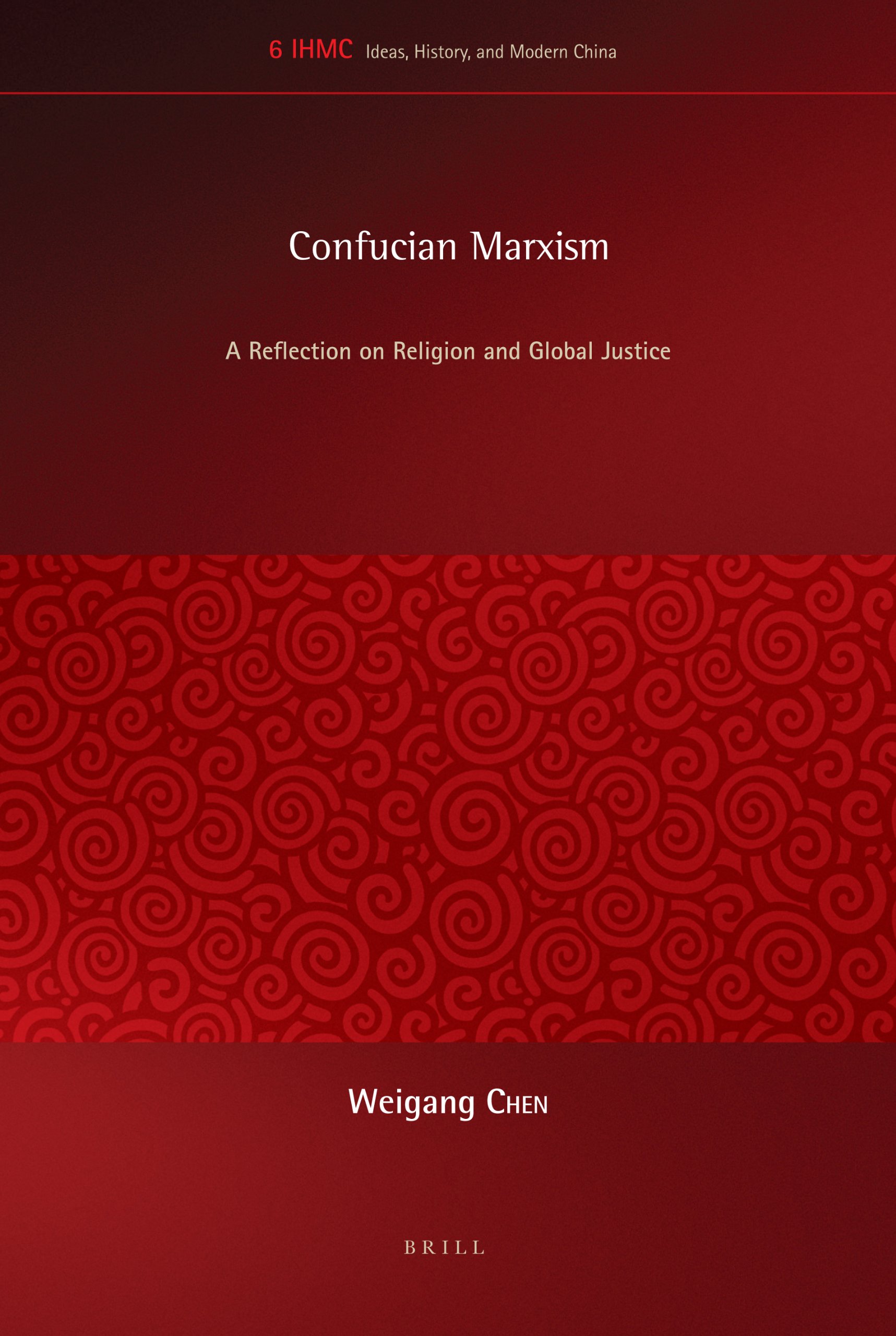
陈维纲:Confucian Marxism: A Reflection on Religion and Global Justice

Confucian Marxism: A Reflection on Religion and Global JusticeConfucian Marxism: A Reflection on Religion and Global Justice. Brill 2013. ISBN: 9789004228986.
Buttressed by an autocratic system, China’s colossal economic growth over the past decades seems to have had the paradoxical effect of undermining the foundation of Western domination but at the same time invigorating Eurocentricism. In particular, it highlights the current relevance of the central conviction of Weber’s Orient: the absence of civic roots in non-Western societies will create a kind of “uncivic” capitalist system in which one has no choice but to seek to compensate for instabilities through authoritarian institutions. Does this mean that the West may alone afford to harmonize political stability with the universalistic ideal of justice as the basic structure of society? If not, how then is it possible to develop a notion of the primacy of social justice that transcends the limits of liberal democracy? This book aims at addressing these timely questions by drawing on “Confucian Marxism”—a distinctive perspective on civil society.

“That’s capitalism for you.”

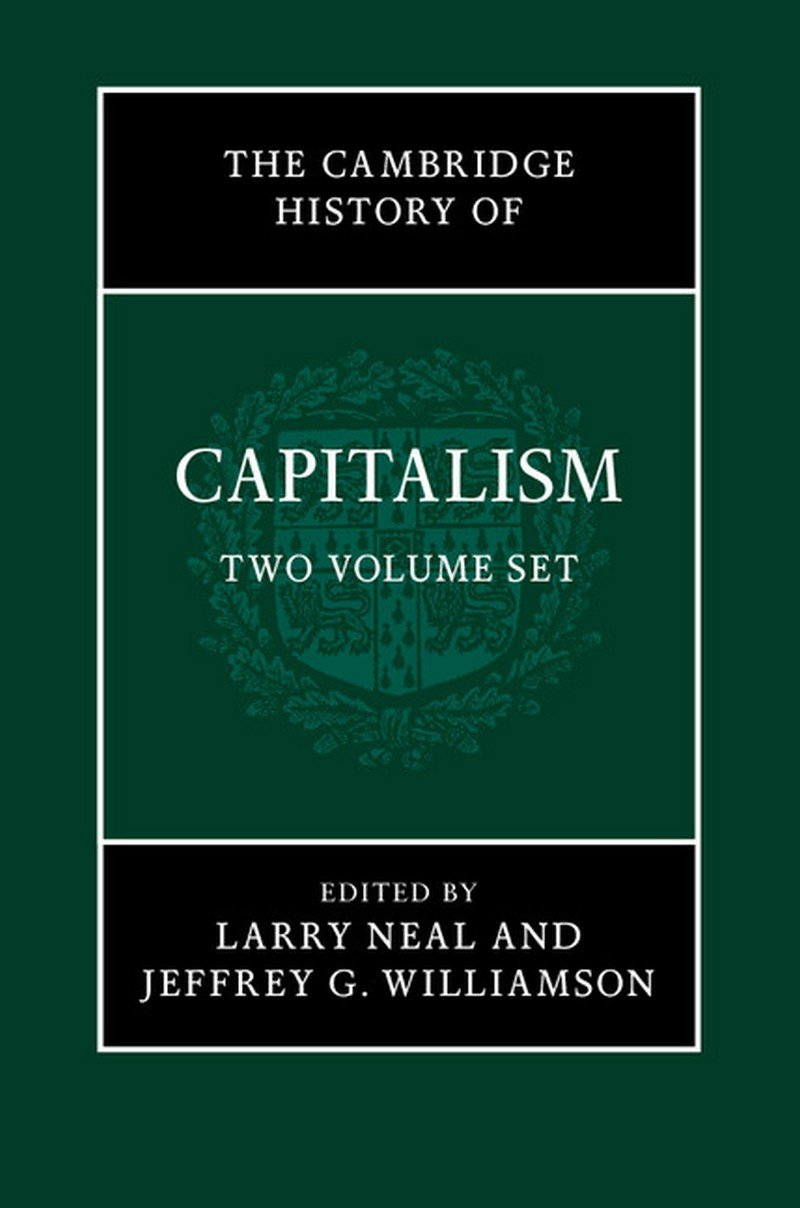
The Cambridge History of Capitalism很多人(上至 Bill Gates,下至在下)喜欢阅读《经济学家》杂志,不是没有缘由的。比如这篇针对《剑桥资本主义史》(The Cambridge History of Capitalism)的短评,开头结尾都写得有声有色:

ECONOMICS publishing has recently undergone a great democratisation. High-quality academic writing was once confined to a handful of journals, mostly accessible in academic libraries. The journals still exist, but mostly serve to influence university hiring decisions. Writing has overwhelmingly gone online, where ambitious academics release free working papers, plug them on Twitter, and watch the discussion unfold. Though this democratisation has critics, it has vastly expanded the audience for economics writing.

This, in turn, may prime the market for another throwback: the authoritative collection of essays. For readers whose interest has been piqued online, the anthology provides an appealing way to learn about a range of subjects. “The Cambridge History of Capitalism” is an excellent example of the genre. …

[The Cambridge History of Capitalism is] a thoughtful account of capitalism. Rarely is economic history so accessible. Yet it is unclear who is meant to read it. University libraries will buy a copy, but the material is not especially rigorous by academic standards and is better suited to the ordinary reader. The price, however, is not. At £150, the work may not appeal to the casual economics readers who have benefited most from the online revolution. The publishers will have their reasons: large margins may be earned on limited sales to libraries and rich bankers. There is talk of a paperback version. But the upshot, for the moment at least, is that most readers will turn elsewhere for their economic history. That’s capitalism for you.

Capitalism through the ages: A grand tour

《经济学家》2014年最佳图书

参考:《经济学家》年度最佳图书:2011201220132015201620172018

The best books of 2014 were about the South China Sea, the fall of the Berlin Wall, Kaiser Wilhelm II, the publishing of “Ulysses” and capitalism in the 21st century

Politics and current affairs


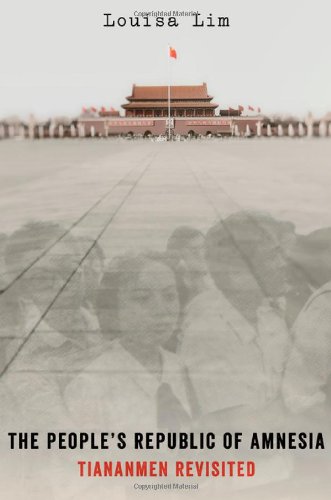
The People’s Republic of Amnesia: Tiananmen Revisited. By Louisa Lim. Oxford University Press; 248 pages; $24.95 and £16.99. Buy from Amazon.com
Twenty-five years after the bloodshed in Beijing, new details keep emerging. This reconstruction, by a correspondent for America’s National Public Radio, is as important for Western readers as it is for the new Chinese generation that has grown up since 1989 and knows little of what happened.


The Tyranny of Silence: How One Cartoon Ignited a Global Debate on the Future of Free Speech. By Flemming Rose. Cato Institute; 240 pages; $24.95. Buy from Amazon.com
The culture editor of the Danish newspaper that published cartoons about the Prophet Muhammad in 2005 offers a personal account of the ensuing controversy and what it means for democracy.

高峰枫:谁的“燕京学堂”?

2014年5月5日,北京大学宣布正式启动“北京大学燕京学堂”计划(Yenching Academy,Peking University)。根据北大的官方介绍,这是一个独立建制的教学科研实体机构。燕京学堂为住宿式学院,将开设一年制的“中国学”硕士项目,包括“哲学与宗教”、“历史与考古”、“语言、文学与文化”、“经济与管理”、“法律与制度”和“公共政策”六个方面的课程体系,主要以英文讲授。2015年9月,第一届学生即将入校,其中包括六十五名海外学生、三十五名中国大陆学生,所有人都将获得全额奖学金。教师的配置,是从北大现有教师中联合聘任三十人,从国内外招聘“杰出学者”二十人,并邀请“国际顶尖访问教授”二十人。

虽然目前公布的资料和数据都不多,但根据有限的报道,可大体获知这一新机构的办学宗旨和特色。我对于“燕京学堂”在命名、选址以及学科定位等方面都存有不少疑惑,特借《上海书评》一角,发表一点浅见,希望能将所牵涉的复杂问题辨析清楚。

北大与燕京

在北大发布的官方文稿中,对于这一机构的定位和宗旨有这样的阐释:燕京学堂“根植京师大学堂的中华文明底蕴,绵延北京大学五四新文化运动的精神命脉,承接百年燕园孕育的博雅教育理念和国际化视野”。这一句大可斟酌。新文化运动恰恰以激烈反对传统文化而著称,这样的“精神命脉”是很难和传统文化的“底蕴”相协调的。而且,此机构的正式名称中有“燕京”字样,英文表述也启用传统的拼写(Yenching),再加上“百年燕园”的提法,凡稍知近代教育史的人,都自然会联想到著名的燕京大学

约翰·萨顿:《垄断的秘密:沉没成本与市场结构》

社会思想译丛 ★ 新书讯

垄断的秘密:沉没成本与市场结构约翰·萨顿(John Sutton):《垄断的秘密:沉没成本与市场结构》(Sunk Costs and Market Structure: Price Competition, Advertising, and the Evolution of Concentration),艾佳慧、贾绅译,北京大学出版社2014年。ISBN: 9787301242353. @豆瓣 @小组

《垄断的秘密:沉没成本与市场结构》一书在近年来支配了产业组织文献的博弈理论模型与传统的结构/产品/绩效范式(由贝恩及其理论继承者发展而成)倡导的实证研究主题之间搭建了一座桥梁。

由于很多理论结果被证明其依赖于很难被测定的市场特征,一些观察者认为博弈论文献不能为构成20世纪50年代以来该主题的跨行业实证研
究提供理论基础。运用当前的博弈理论模型,约翰·萨顿重新检验了传统研究主题。他指出, 尽管许多结果具有“微妙”的性质,但在合理改变
模型设定时,存在一些被证明是相当稳健可靠的理论预测。因此,当我们在范围很大的跨行业间寻找统计规律性时,应当考虑这些结果。

萨顿收集了一个行业研究“矩阵”,包括6个国家(法国、德国、意大利、日本、英国和美国)和食品饮料部门中的20个行业。为解释产业结构的演化,他结合理论、计量证据以及在细节上展示各不相同的结构演化模式以发现在复杂的产业结构演化中博弈论进路的长处和局限。

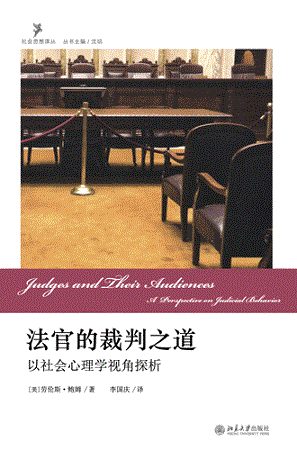
劳伦斯·鲍姆:《法官的裁判之道:以社会心理学视角探析》

社会思想译丛 ★ 新书讯

法官的裁判之道:以社会心理学视角探析劳伦斯·鲍姆(Lawrence Baum):《法官的裁判之道:以社会心理学视角探析》(Judges and Their Audiences: A Perspective on Judicial Behavior),李国庆译,北京大学出版社2014年。ISBN: 9787301168004. @豆瓣 @小组

内容简介

是什么驱动着法官的决策过程?劳伦斯·鲍姆就这个关键的问题提供了一个新视角,这一视角是基于法官对于获得重要受众的认同的利益(兴趣)。

鲍姆认为,受众对法官的影响是无处不在的。这种影响来自于法官对于获得欢迎和尊重的利益(兴趣),而获取欢迎和尊重对于大多数人来说都是一个核心性的动机。法官关心来自受众的尊重,这是因为他们喜欢尊重本身,而不仅仅是把尊重当成达到别的目的的手段。《法官的裁判之道——以社会心理学视角探析》使用社会心理学的研究成果来论证,受众在相当大程度上塑造了法官们的选择。本书利用了有关司法决策过程的大量学术文献和实证研究证据,分析了几种类型的受众(包括公众、其他政府部门、法院同事、法律职业共同体以及法官在社会上的伙伴)的潜在和实际影响。

在有关司法行为的一些关键问题上,学者们意见不一,而本书提供了一种更深层次的理解,指出了司法行为在某些方面偏离了现存模型的假设,并且证明了这些模型有待进一步改进。

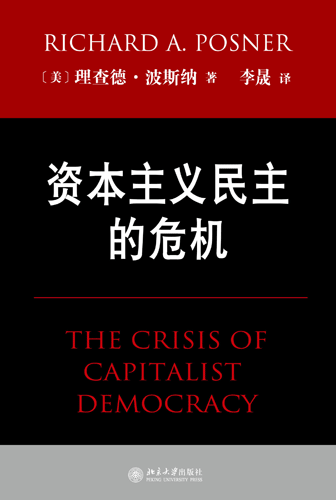
理查德·波斯纳:《资本主义民主的危机》

理查德·波斯纳文集 ★ 新书讯

资本主义民主的危机理查德·波斯纳:《资本主义民主的危机》(The Crisis of Capitalist Democracy),李晟译,北京大学出版社2014年。@豆瓣 @小组

本书是波斯纳关于2008年全球金融危机的第二本著作。作为《资本主义的失败》的后续,《资本主义民主的危机》进一步深入到经济学的理论语境当中,不仅从现实层面对于奥巴马政府的危机应对政策做出了细致分析和犀利批评,还从理论层面讨论了金融危机的形成与发展所带来的启示,在此基础上提出了有建设性的改革措施,建议通过经济、法律、公共政策等多方面手段加强政府的金融监管,并展望了后危机时代的前景。波斯纳指出,金融危机不仅反映了投资者与公众面对泡沫时的盲动,更显示出政府放松监管背景下金融本身的危险性和当下经济学学术发展的误区,以及美国政治结构内在的低效、分裂与冲突,因而不仅是经济危机,更是资本主义民主的危机。

3 of 21
1234567